- Pictures
- Damage Patterns
- Biology
- Propagation
- Pest Control
- Biological Control
- Historicals
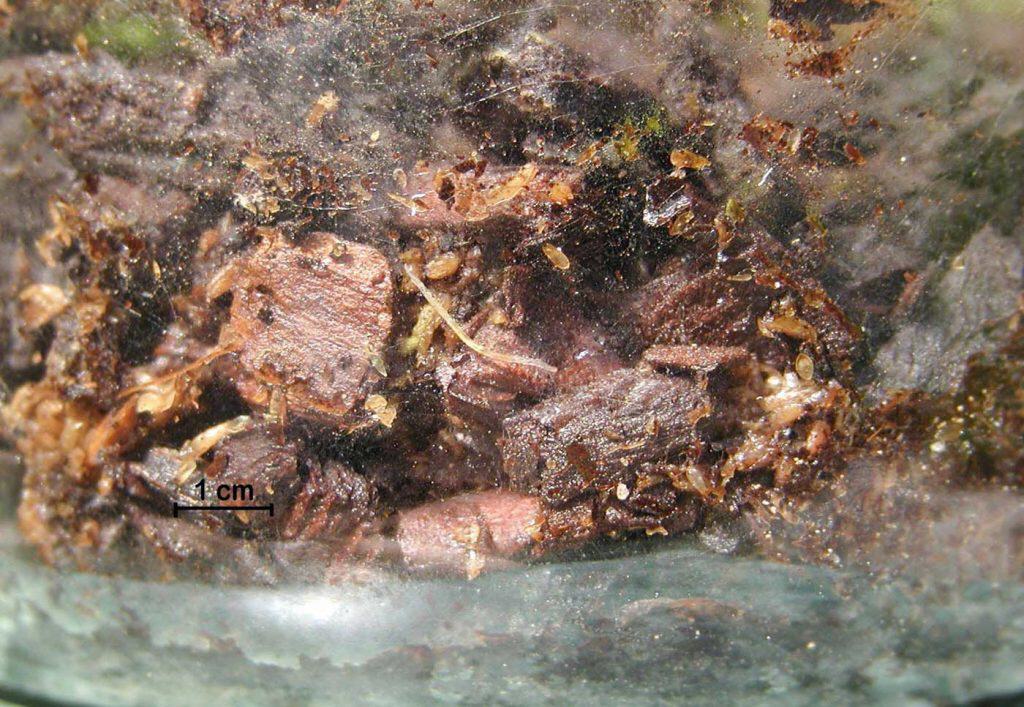
In moist substrates, the larvae feed on tender roots, allowing parasitic root fungi to invade the plants. In the event of a severe infestation, the substrate structure is destroyed relatively quickly by the formation of fine crumbly substances.
Fungus gnats are small, 4.0-6.0 mm long, black, delicate insects. The adult insects fly in jerky movements above the substrate surface.
The 4.0-7.0 mm long larvae are glassy, whitish, slender with a black head capsule. Fungus gnats only occur in decomposed, anaerobic substrates. They are extremely sensitive to dry conditions. They live in moist substrates, feeding mainly on decaying plant debris, but can also damage living plants if they occur in large numbers. Fungus gnats larvae are often found in conjunction with fungal infestation in the thick roots of Phalaenopsis. Weakened plants or plants that have been damaged by harmful fungi are very attractive for egg laying.
The female lays up to 200 transparent eggs in moist soil. After about 7-8 days, the larvae hatch. They are almost transparent and have black heads. The larvae feed on the fine hair roots and organic material in the soil, which weakens the plant. After about 14 days, the larvae pupate. After 3-4 days, a new mosquito emerges from the pupa and continues the cycle.
The entire development from egg to mosquito takes only about three weeks at 20°C.
Yellow stickers should do their job.
Allow the plants to dry out and use aerobic (airy) substrates. Fungus gnats are purely a consequence of overly wet cultivation.
There was nothing to be found about fungus gnats in the available literature. However, since extremely toxic chemicals such as arsenic, nicotine and cyanide were always used, the animals had no chance of survival from the outset.