- Pictures
- Damage Patterns
- Biology
- Propagation
- Pest Control
- Biological Control
- Historicals
Leaf destroyed by aphids
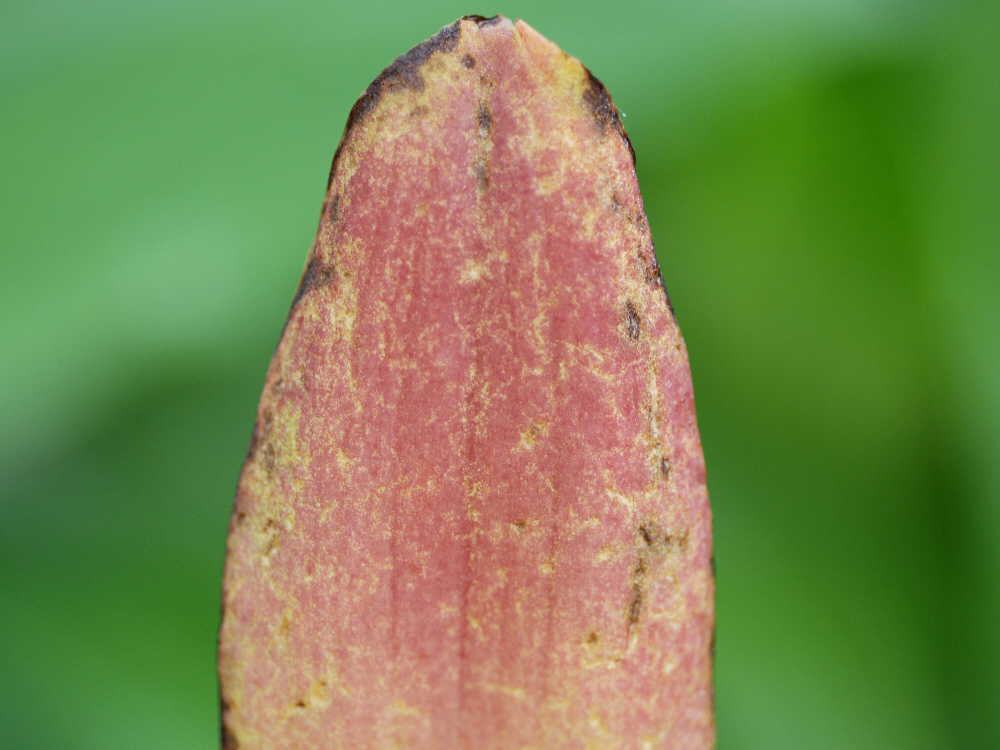
Aphids are sucking insects. They like to pierce soft, fresh parts of plants, suck out the plant sap and push some of it back out again. As they are very mobile and can quickly move from plant to plant, they are a feared virus carrier in monocultures.
Otherwise, they mainly damage flowers, young shoots and soft leaves. As a result, they secrete honeydew, which attracts other insects (including ants). The honeydew closes the pores, hindering the plant's respiration, and sooner or later sooty moulds (sooty mildew) appear. The secretion of toxic saliva can also cause malformations, deformations, curling or twisting of the leaves.
Aphids are small insects that grow to only a few millimetres in size. (Exceptions up to 7 mm) The animals live as plant suckers (phloem suckers) and have a piercing proboscis. Almost only the amino acids are processed from the sap, while the carbohydrates are excreted as honeydew.
Most species are wingless, but there are also winged forms when generations change. These spread very quickly and then frequently change hosts. Actual reproduction occurs through parthenogenesis.
The most common species on ornamental plants are:
Green peach aphid (Myzus persicae Sulz.): Greenish to reddish in colour
Green cucumber aphid, cotton aphid (Aphis gossypii Glover): Dark green marbled, light green to yellow
Green-spotted potato aphid (Aulacorthum solani Kalt.): Light green in colour with antennae longer than the body
Green-striped potato aphid (Macrosiphum euphorbiae Thomas): Yellowish-green in colour with black siphons and antennae longer than its body
Spotted greenhouse aphid (Myzus circumflexus Buckton)
Dotted greenhouse aphid (Myzus ornatus Laing.)
Birth of Aphids
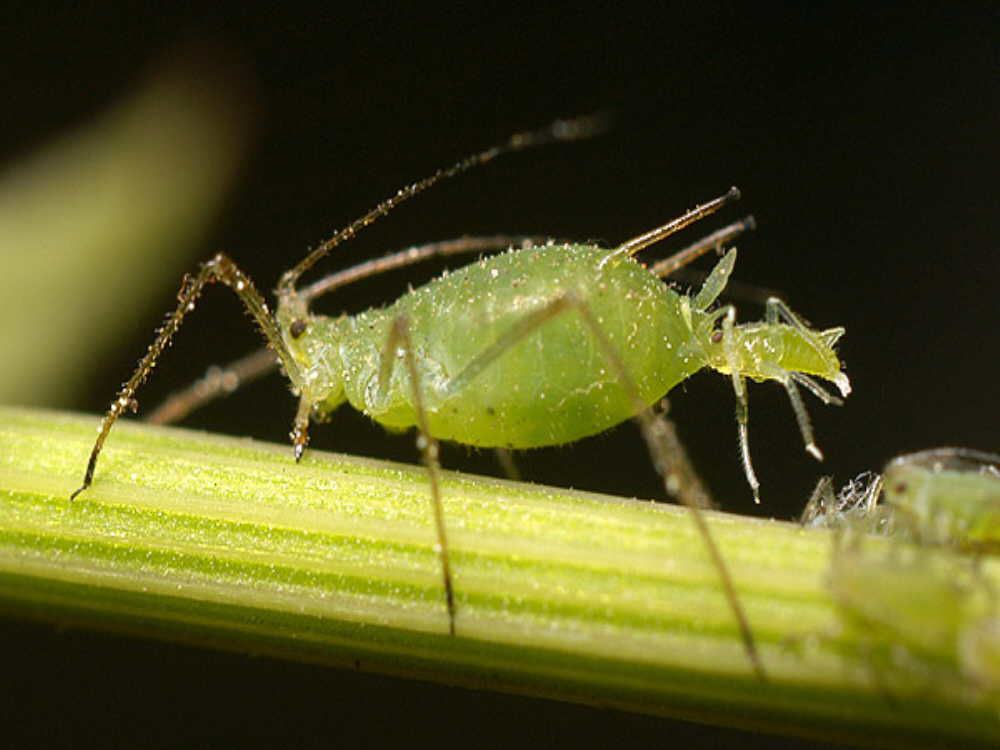
Only very few species reproduce sexually. In most cases, females give birth to already fertilised, fully developed young. In many species, sexual development can occur after 20-40 cycles of parthenogenesis, but it can also be completely omitted. When danger threatens, as in the case of ladybirds, for example, alarm pheromones are released into the air, ensuring that sexual reproduction with winged parents takes place again immediately.
There are numerous sprays available for aphids, most of which provide immediate relief. However, some species, such as the green peach aphid (Myzus persicae Sulz.) and the green cucumber aphid, also known as the cotton aphid (Aphis gossypii Glover), are immune to many groups of active ingredients.
Biological control of aphids is as varied as the number of species. Predators such as the Australian ladybird beetle, lacewings and parasitic wasps can be very effective when used correctly, but are not suitable for use on a windowsill.
Widely used home remedies include wiping, spraying with soap or milk, nettles and tobacco juice.
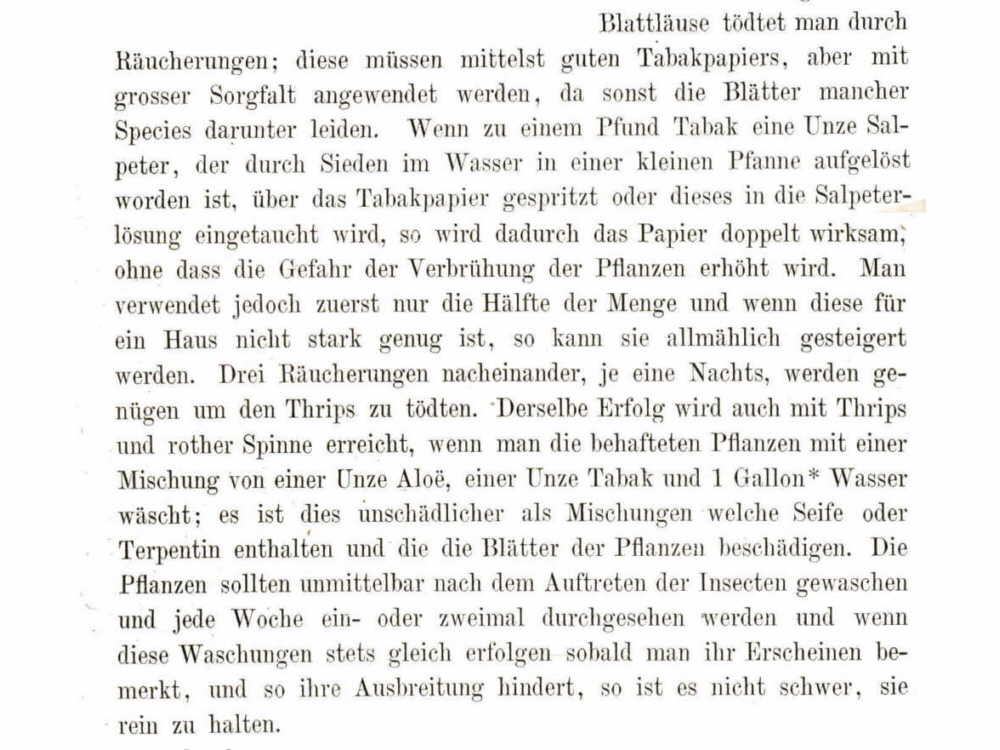
These treatment methods from 1848 are provided for informational and entertainment purposes only. Please note that the use of some of the chemicals mentioned here is no longer permitted today, as they can be harmful to health (including that of the user) and very harmful to the environment. Reading, reflecting and smiling are permitted, but do not attempt to replicate these methods.