- Pictures
- Damage Patterns
- Biology
- Propagation
- Pest Control
- Biological Control
- Historicals
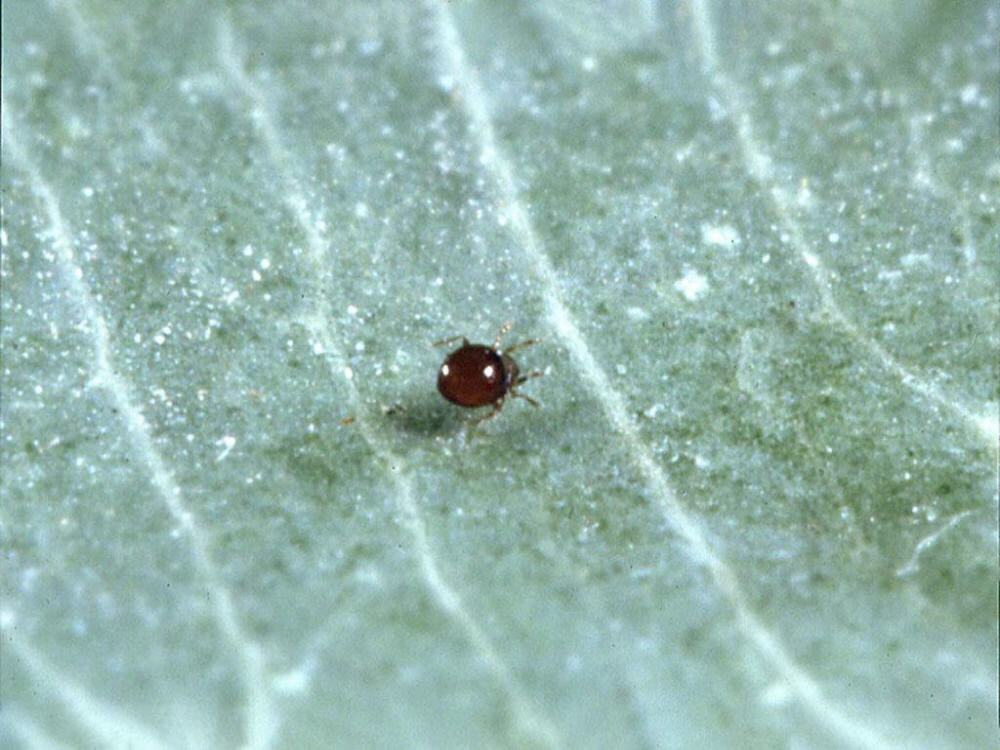
Deformations of younger leaves with slight leaf margin necrosis on young Phalaenopsis plants. As the plant grows, the damaged areas constrict and developing leaves become significantly indented. The young, soft leaves of Phalaenopsis probably serve as a food supplement for moss mites. Small punctiform necrosis and slight deformations can be found on flowers when infested.
Horn mites belong to the arachnid family (Oribatida) and are also known as moss mites, beetle mites or armoured mites. They live in damp, decomposed substrates. This species of mite is heavily armoured and has a spherical shape. This protects it and prevents it from drying out.
Horn mites reproduce (as far as is known) exclusively through parthenogenesis, i.e. the females give birth to live, fertilised young. The insect-typical transformation from egg -> larva -> pupa -> imago (full-grown insect) does not occur.
Moss or horn mites like acidic soils, so pH value control is necessary. There are some acaricides (sprays against arachnids) that work, but they must be changed.
Clean substrates and pH control prevent or reduce infestation. In case of infestation, reduce humidity, as these mites do not like dry substrates and dry air. The use of predatory mites (Hypoaspis miles Berl., H. aculeifer Can.) is very promising. These beneficial insects are very polyphagous and feed on other soil mites, springtails and many insect larvae. They also eat the larvae of horn mites. In addition to horn mites, they also prey on many other pests such as springtails and many insect larvae. The use of sphagnum in the substrate can greatly promote the preservation and reproduction of predatory mites.
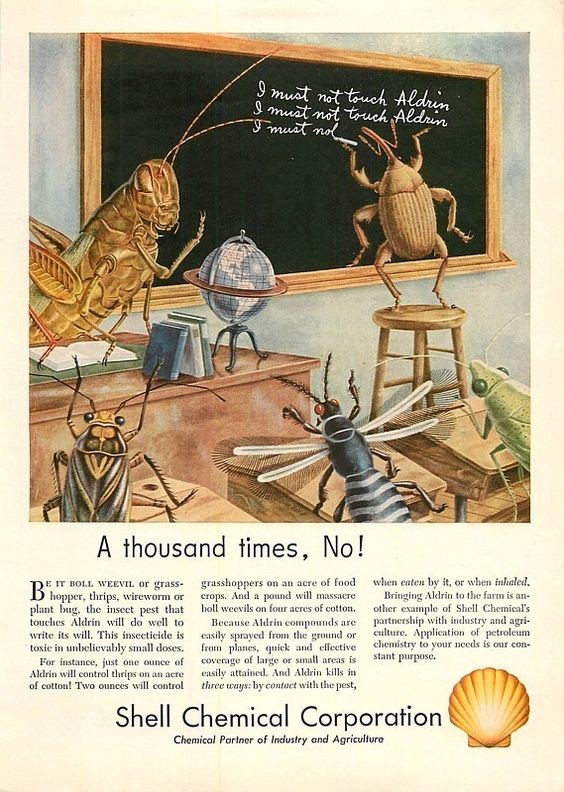
An advertisement from 1945-1949 promoting a broad-spectrum product that truly destroys everything...